
Sort by
Bluetooth Hearing Aids
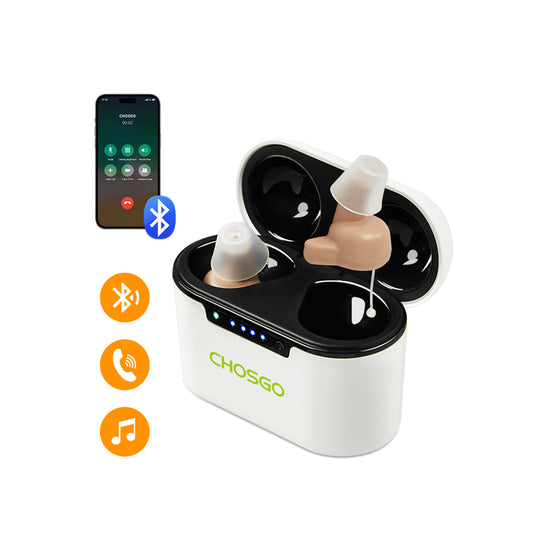
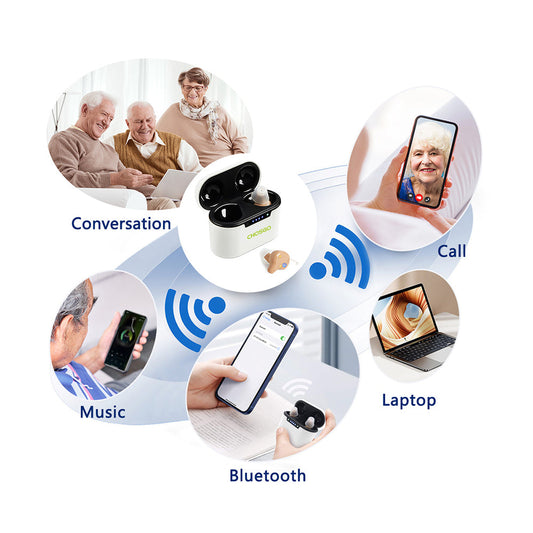
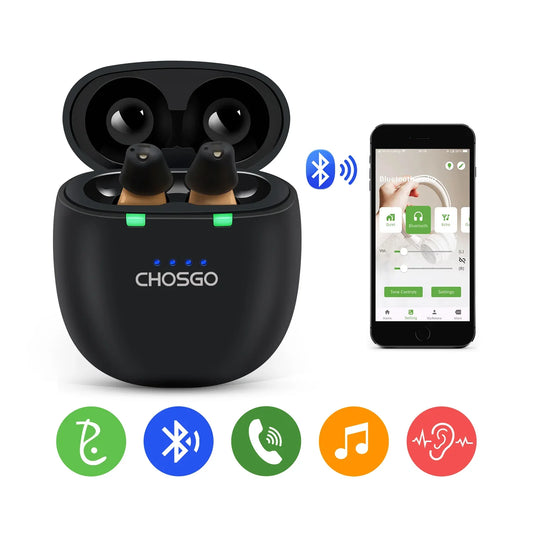
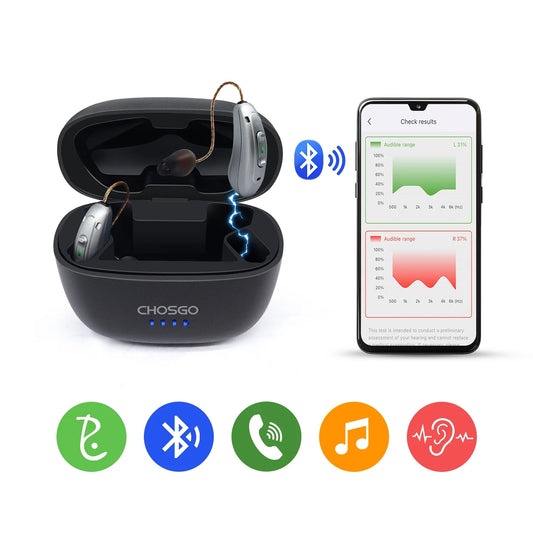
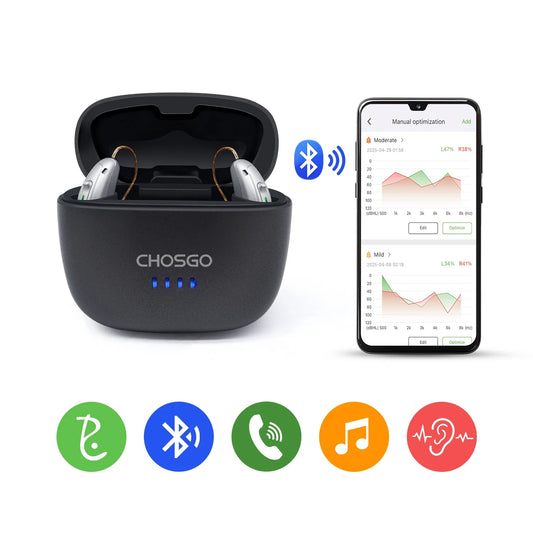
Bluetooth Hearing Aids are hearing aids equipped with Bluetooth technology, allowing them to wirelessly connect to other devices such as smartphones, tablets, or laptops, as well as TVs or intermediary devices (typically available for purchase through prescription or over-the-counter hearing aid retailers). This enables users to stream audio directly from their devices to the hearing aids, making it easier to take phone calls, listen to music, podcasts, and other streaming media without the need for cables or adapters. Bluetooth hearing aids often come with companion apps that allow users to control settings and personalize their listening experience via their smartphones.

45-DAY FREE TRIAL
100% MONEY-BACK GUARANTEE.
It’s our 100% satisfaction guaranteed promise to you! Try Chosgo Hearing Aids for 45 days and if you’re not fully satisfied, return them for a full refund.
Comparing These Best-Selling Hearing Aids

All Products

SmartU

V03B Pro

K23

SmartR

V402R

K419R
Rechargeable
Yes
Yes
Yes
Yes
Yes
Yes
Battery Life
18 H
18H
18 H
18 H
18 H
18 H
Bluetooth APP
Yes
Yes
Yes
Not
Not
Not
Music streaming & calls
Yes
Yes
Yes
Not
Not
Not
Hearing test
Yes
Yes
Not
Not
Not
Not
Self-fitting
Yes
Yes
Not
Not
Not
Not
Audiogram editor
Yes
Yes
Not
Not
Not
Not
Programs
8
4
4
4
4
4
Channels
16
16
12
12
12
12
Feedback Cancelation
Yes
Yes
Yes
Yes
Yes
Yes
Noise reduction
Yes
Yes
Yes
Yes
Yes
Yes
Hearing Aids Type
Invisible-in-canal
Receiver-in-Canal
In-the-ear
Invisible-in-canal
Behind-the-Ear
Completely-in-canal
Orig. Price
(US Dollars)
(US Dollars)
$849- $1089
$489- $768
Special $399
Special $209
$359
Special $99
Your Hearing, Our Promise
45-day
Risk-Free Trial
100% satisfaction guaranteed or you can full refund for return it, hassle-free!

Your Direct Hearing Aid Factory
Offer a wide range of hearing aid types to choose from, meeting various hearing loss needs.
Change Anytime Until You're Satisfied.
Fast & FREE Shipping
Enjoy fast & FREE shipping on all orders, delivered in 3-7 business days.

FDA
Registered
Certified for safety and quality you can trust.
1-Year
Warranty
Worry-free protection. Your satisfaction guaranteed.
Get Trade-in Privileges
Get up to 65% off with our trade-in privilege.
Lifetime support
Friendly customer are ready to help you on phone, email, chat or text.
Enjoy the Latest Technology at the Lowest Cost
Evaluate
1、Take some photos of the old hearing aids and send them to our customer service via email or online chat.
2、Our experts will assess the condition of your old hearing aids and determine their trade-in value.
Get Trade-In Offer
1、Based on the assessment, you'll receive a trade-in offer. Minimum price of 35% of the selling price (excluding discounts), and a maximum of 60%.
2、Choose the newest OTC hearing aids that you like.
Free Doorstep Delivery!
1、Complete Payment.
2、Free shipping & doorstep delivery.
Quality Assurance
1、45 Days Free Trial & 100% Money Back.
2、1-Year Manufacturer's Warranty.
3、Continue to Enjoy Trade-In Privileges.
Free Life Time Support

For fastest service email to us or use our chat online.
Our friendly, professional service team of OTC Hearing Aids are always ready.
Hearing Aids with Bluetooth Make Life Easier.
While not all Bluetooth hearing aids have the same features (such as streaming audio), all Bluetooth hearing aids can wirelessly connect to compatible devices like smartphones. By remotely connecting to the devices mentioned below, Bluetooth hearing aid can be used for many activities, turning your hearing aids into wireless headphones.
- Hear phone conversations more clearly .
- Listen to your favorite TV shows at the volume of your choice.
- Use your hearing aids to Listen to music and podcasts.
- Enjoy better sound quality during video chats and TV programs.
- Benefit from smartphone apps designed specifically for Bluetooth hearing aids
The main types of Bluetooth technology are as follows:
- Classic Bluetooth: The original version of Bluetooth technology used for short-range wireless communication. It is commonly used to connect devices such as phones, headphones, keyboards, and mice.
- Bluetooth Low Energy (BLE): Also known as Bluetooth 4.0, specifically designed for low-power devices such as smartwatches, health trackers, and smart home devices. BLE offers better energy efficiency and transmission rates compared to Classic Bluetooth.
- Bluetooth 5.x: This is the latest version of Bluetooth technology, including Bluetooth 5.0, 5.1, and 5.2. Bluetooth 5.x provides faster data transfer rates, longer communication ranges, better interference resistance, and improved BLE functionality.
- Bluetooth Mesh: This is a new type of network topology built on Bluetooth Low Energy technology, allowing for large-scale device communication and control. Bluetooth Mesh is commonly used in areas such as smart homes and smart lighting systems.
Advantages and Disadvantages of Bluetooth Hearing Aids:
- Advantages:
App Connectivity: Allows for adjustments in volume, tone, and hearing programs via smartphone apps. Many models feature a "Find My Hearing Aid" function to locate lost devices.
Enhanced Connectivity: Some Bluetooth hearing aids enable phone calls, music playback, or other media streaming directly through the hearing aids via Bluetooth. They can also connect to laptops and TVs (or intermediary devices).
Remote Control: Certain Bluetooth hearing aids allow audiologists to make remote adjustments or enable customers to self-adjust their hearing aids for optimal performance through online testing or uploading audiograms.
Enhanced Connectivity: Seamless connection with smartphones, TVs, tablets, and other audio devices.
Improved Sound Quality: Provides clearer sound by transmitting signals directly to the hearing aids.
Wireless Functionality: Offers more freedom and comfort without the hassle of tangled wires.
- Disadvantages:
Higher Price Tag: Bluetooth options typically come with a higher price compared to non-Bluetooth alternatives.
Rapid Battery Drain: Classic Bluetooth may lead to quicker battery depletion.
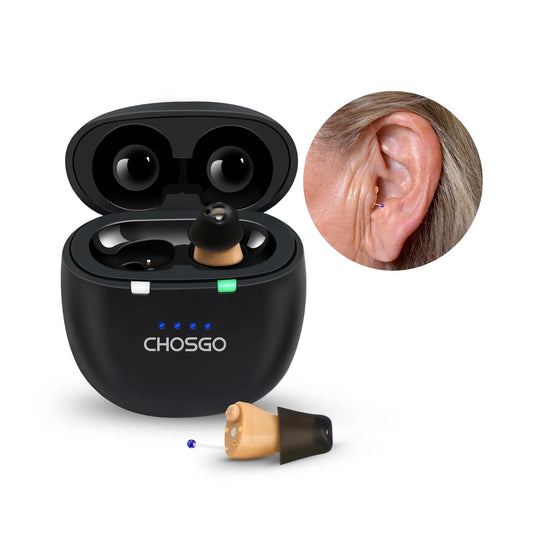
Size Limitations: Bluetooth functionality may not be available in many discreet models (such as IIC styles) due to size constraints.
Connectivity Issues: Possible problems with connection stability may occur.